Walter Benjamin, Sant Antoni and the 1930s

There was a time when Sant Antoni was a quiet fishing village, visited only by a few travellers in search of an untouched paradise, far from fashion trends and political unrest. One of those visitors was Walter Benjamin. In this article, we follow a route through the San Antonio he saw and experienced during his stays in 1932 and 1933.
Sant Antoni in the 1930s: A Village of Humble Homes and Summer Villas
When Walter Benjamin first arrived in Sant Antoni — known then as San Antonio Abad — it was 1932, and both good and bad fortune brought him to this remote Mediterranean corner, still untouched by modernity. He stayed from April to July, and, as a Jewish writer, philosopher and literary critic, he especially appreciated the absence of other Europeans, encountering only two or three German couples.
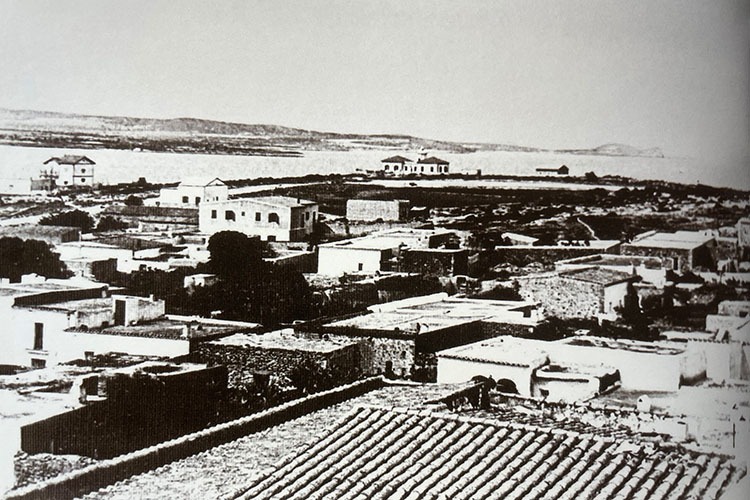
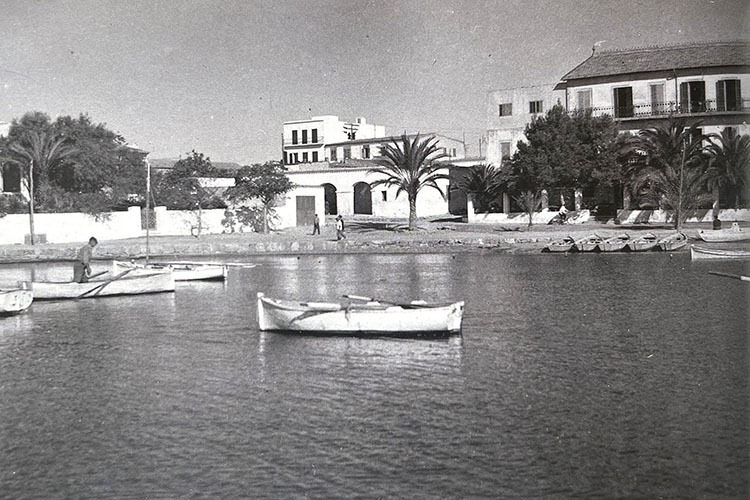
At the age of 39, Benjamin found in Sant Antoni and its surroundings an unspoiled natural landscape, a rural world where traditions remained largely unchanged, and a way of life that contrasted sharply with the modernist architecture he often criticised in his writings. The town consisted of a cluster of small houses near the church, the town hall, a few summer villas — such as Villa Mercedes and Villa Nieves, which still stand today — and scattered buildings like the Ses Coves Blanques lighthouse, the d’en Simó windmill, and the Sa Punta mill, beside which he lived during his first visit.
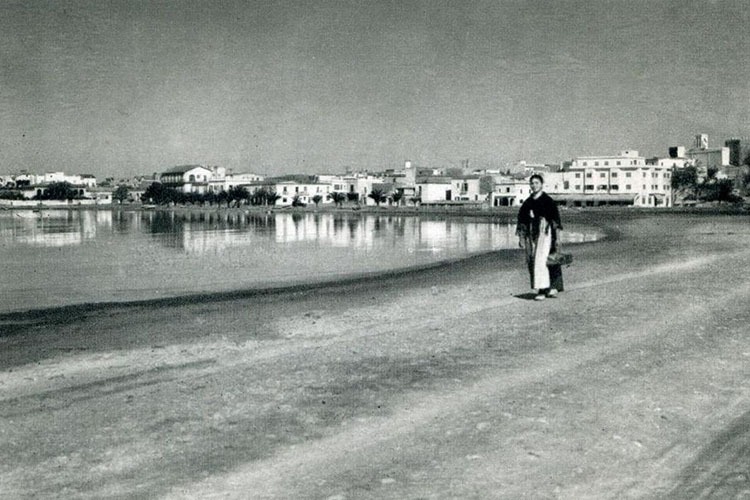
Walter Benjamin’s Route through Sant Antoni
These locations form a route through the key places the German intellectual explored during his stays in 1932 and 1933.
- Sa Punta des Molí: The modest house next to the mill where Benjamin stayed during his first visit no longer exists — it was demolished around 30 years ago. He rented it from a local fisherman for a small sum, as he had limited financial means. From there, he could bathe daily in the bay, read under the trees, write in peace, take long walks, and chat with locals and the few visitors. The windmill and the nearby well remain today, both restored.
- s’Arenal beach: The beach looks very different today from the one Benjamin would have known. Back then, it was a wide stretch of sand with dunes and coastal vegetation, a small stream that emptied into the bay, and a seabed full of prawns, clams, crabs and eels.
- Cine Torres: When Benjamin arrived in Sant Antoni, the town already had a cinema, Cine Torres, which opened in 1931 in a modest building that still stands on Carrer Bisbe Torres, although now closed. At that time, the sea reached what is today the promenade of Ses Fonts, as the land reclamation came later.
- Hotel Portmany: Sant Antoni’s first hotel opened in 1933, much to Benjamin’s dismay. During his second visit, from April to September that year, he noted with concern the increasing presence of European — especially German — visitors. Though minimal by today’s standards, it marked a shift for Benjamin, who was disillusioned by the cultural and social changes of the 20th century. The hotel was considered a luxury at the time and has since been renovated, maintaining its distinctive colonial-style façade.
- Sant Antoni’s church: In Benjamin’s time, the church and its tower could be seen from Sa Punta des Molí and the beach. Today, it is surrounded by buildings, but both the interior and exterior retain their original appearance. It remains one of the finest examples of traditional fortified churches on the island.
- Es Molí d’en Simó: Located on Carrer de l’Estrella, this former flour mill, built in the Mallorcan style with a narrow tower, now houses a small collection featuring traditional Ibizan clothing, weaponry, basketry, and musical instruments from the 19th century onwards.
- Villa Mercedes: Built in 1901 in an eclectic style, it preserves the typical features of early summer villas, such as balustraded terraces and colonial details. Nearby Villa Nieves, on Carrer del Mar, was built in a similar style.
- Faro de Ses Coves Blanques: Constructed in 1897 in what was then an isolated part of the coast, the lighthouse was in operation until 1963. It is now used as an exhibition space.
Ibiza in the Writings of Walter Benjamin
During his first stay in Sant Antoni, Benjamin formed a deep emotional bond with the island, its people, and its traditions. He saw it as a kind of paradise, untouched by the rest of Europe. Over those months, he wrote stories and articles that would later be included in works such as Berlin Childhood around 1900 and what would become known as the “Ibiza Series”. He also wrote letters to friends and colleagues almost daily, describing the island’s striking landscape and his impressions of the wind, the austerity, and the islanders.
His second visit in 1933 had a darker tone. By then, Benjamin was fleeing Nazi Germany after Hitler’s rise to power, and Ibiza had begun to attract more tourists — mostly Germans and Americans — which pushed up rental prices just as his financial situation worsened. That summer, he stayed in a house near the Ses Coves Blanques lighthouse and later in a room close to Sa Punta, rented by a German couple who were friends of his.
He left the island in late September 1933 and never returned, heading instead to Paris, where he would live until his tragic death in 1940. To learn more about Benjamin’s thoughts and experiences in Sant Antoni, Experience and Poverty: Walter Benjamin in Ibiza by Vicente Valero is a highly recommended read.
Other intellectuals and artists who visited Ibiza during the 1930s and were equally struck by its preserved architecture and culture include Paul Gauguin (the painter’s grandson), Dadaist artist and photographer Raoul Hausmann, American journalist Elliot Paul, and architects Erwin Broner and Josep Lluís Sert, among others.
Related news
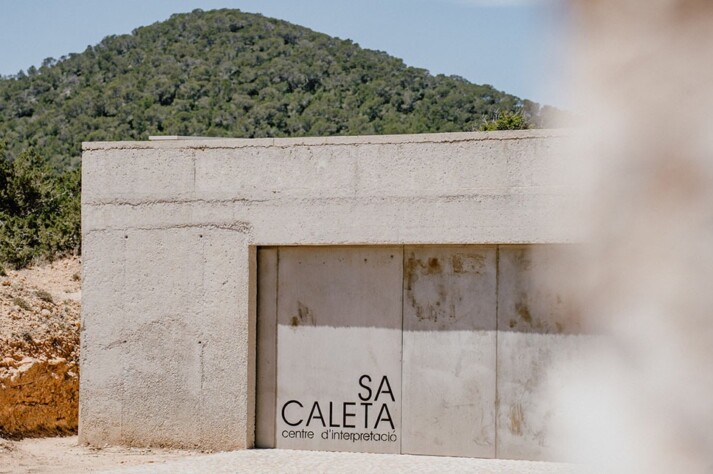
Discover how the Phoenicians lived in Ibiza by visiting the new Sa Caleta Interpretation Centre, located just a few metres from Es Bol Nou beach, next to the archaeological site of the same name. A visit that will give you a better understanding of this ancient Mediterranean civilisation. The Phoeni…

The island of Tagomago is a private island in Ibiza located off its eastern coast and very well known thanks to a luxury villa built on its territory that is usually rented by famous millionaires. However, it is its natural values that make it a unique area to be protected. With a length of 1,525 me…