Phoenicians in Ibiza: new Sa Caleta Interpretation Centre

Discover how the Phoenicians lived in Ibiza by visiting the new Sa Caleta Interpretation Centre, located just a few metres from Es Bol Nou beach, next to the archaeological site of the same name. A visit that will give you a better understanding of this ancient Mediterranean civilisation.
The Phoenicians were one of the cultures, along with the Arabs, Romans and Visigoths, that established the heritage that would later be assimilated by the Catalan conquerors and subsequent generations over the centuries, forming the cultural heritage of Ibiza that remained virtually unchanged until the mid-20th century. The new Sa Caleta Interpretation Centre opens a window onto the origins of Phoenician history in Ibiza, a journey through time that begins in this ancient seaside enclave and ends at the Punic-Phoenician cemetery of Puig des Molins, both sites in Ibiza declared World Heritage Sites by UNESCO.
Sa Caleta, the First Phoenician Settlement in Ibiza
Sheltered from the wind, the natural bay now known as Sa Caleta was chosen by the Phoenicians as the site of their first settlement in Ibiza, founded in the mid-7th century BC. Discovered and excavated between the late 1980s and early 1990s, the materials recovered from the site have helped document everyday life, trade activity and the cultural influence of a strategically located community that served as a base for the Phoenicians’ thriving commercial ventures across the western Mediterranean.
Although the group succeeded in establishing a large and organised settlement, they only remained there for a relatively short period—between 60 and 100 years, according to estimates—before abandoning the area in favour of a larger bay. There, they founded the Phoenician city of Ibosim, which would later evolve into present-day Ibiza Town.

The Sa Caleta Archaeological Site and Interpretation Centre
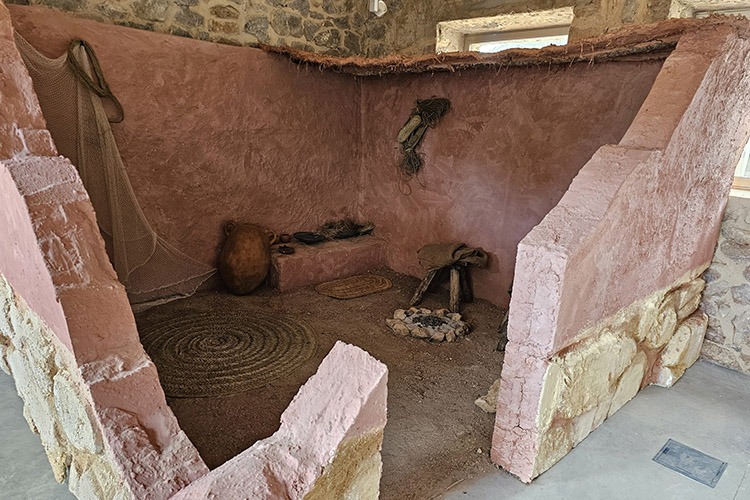
The exhibition space at Sa Caleta, housed in former military buildings from the 1940s next to Es Bol Nou beach, offers an accessible introduction to Ibiza’s first Phoenician settlement. The centre includes a series of informative panels, a reconstruction of a Phoenician dwelling, and various virtual recreations accessible through QR codes and an app available in several languages.
Through both physical displays and digital resources, visitors can learn a wide range of facts about Phoenician life in Sa Caleta: the crops they grew, how and why they produced the highly prized purple dye, what their houses looked like and the materials used to build them, their metalworking techniques, and the navigation methods they relied on to travel throughout the Mediterranean.
Interpretive Routes at the Sa Caleta Centre
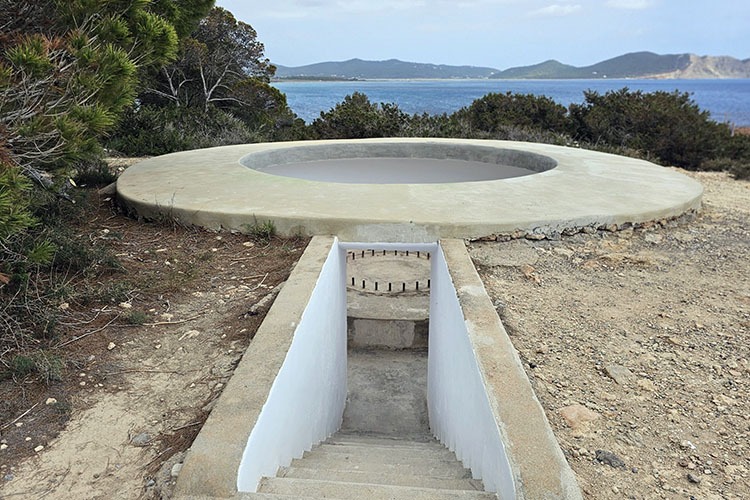
The centre is made up of an indoor exhibition space and two open-air interpretive routes, designed to explore two distinct periods of settlement on the peninsula: the original Phoenician village and the military complex built during the 1940s, in the context of the final years of the Spanish Civil War and the Second World War. Along the Phoenician route, visitors can observe the layout of streets and house foundations and compare them with a 360-degree virtual recreation of the 7th-century BC settlement, available via the mobile app.
This route links with the section dedicated to the military barracks built in Sa Caleta in 1941, intended to protect the air and sea space around a projected military airport. The soldiers stationed there were responsible for constructing the barracks (now home to the interpretation centre), anti-aircraft batteries, guardhouse, trenches and machine gun nests. The military installations remained active and were frequently repaired and modified until the 1960s, when they were eventually abandoned and left unused until their recent restoration.
The Phoenician Heritage Route through Ibiza
The Punic-Phoenician necropolis of Puig des Molins, the largest of its kind in the western Mediterranean, is an essential stop on any route tracing Ibiza’s Phoenician heritage. It is also home to one of the two locations of the Ibiza Archaeological Museum. Other significant sites include the Punic sanctuary of the Es Culleram cave, located near Cala Sant Vicent in the north of the island, and Ses Païsses de Cala d’Hort, an archaeological site that was occupied from the 5th century BC to the 8th century AD by Phoenicians, Romans and Byzantines.
www.museosacaleta.es
Main Picture: Centro de Interpretación Sa Caleta. Foto: santjosep.net
*
Rent a car in Ibiza and discover the wonders of Ibiza’s past and present along the way.
*
Related news
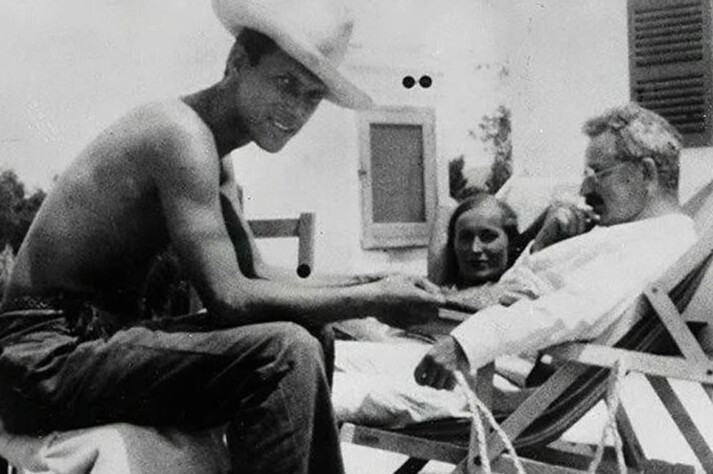
There was a time when Sant Antoni was a quiet fishing village, visited only by a few travellers in search of an untouched paradise, far from fashion trends and political unrest. One of those visitors was Walter Benjamin. In this article, we follow a route through the San Antonio he saw and experienc…

The island of Tagomago is a private island in Ibiza located off its eastern coast and very well known thanks to a luxury villa built on its territory that is usually rented by famous millionaires. However, it is its natural values that make it a unique area to be protected. With a length of 1,525 me…